
The institute expects to complete both, phase-2 and 3 trials in India by the end of this year.
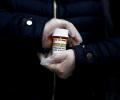
Fabiflu sales have grown by 62 per cent in July. It was launched in June. This drug is being used by doctors for mild-to-moderate Covid patients even if they are in home isolation.

The company said this was 'important' to reinforce the 'complete disassociation' from its erstwhile promoters -- Malvinder and Shivinder Singh.
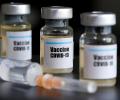
The procurement and distribution will be centralised though the government is yet to take a call on the initial number of doses that will be procured.
Growth has been under pressure since the lockdowns related to Covid-19 started and fresh prescription generations slowed.

Serum Institute of India plans to make 300 million doses of AZD1222 by December, and will begin phase-2 trials soon. It has also tied up with Novavax for development and commercialisation of its candidate.

Serum Institute is investing $200 million to create capacities for the COVID-19 vaccine. Sohini Das profiles its 39-year-old CEO.
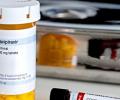
Favipiravir is the only oral anti-viral treatment approved in India for potential treatment of patients with mild to moderate Covid-19 disease.
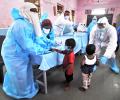
Apart from favipiravir and remdesivir, its key Covid-19 products, DRL has already launched nutraceutical products and hand sanitisers during the pandemic.
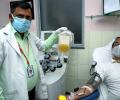
While the process of extracting plasma itself is simple, doctors say that it is the screening of donors, testing and filling up of numerous forms that takes time.

Pune's Serum Institute of India, the world's largest vaccine maker by volume, is placing its bets on the Oxford-AstraZeneca vaccine candidate AZD1222 with CEO Adar Poonawalla stating he would start manufacturing at personal risk.

The two cities finally got their act together by ramping up the testing capacity and implementing stricter quarantine norms.
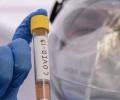
The Drug Controller General of India has sent a letter to the Glenmark seeking clarifications on pricing as well as claims of therapeutic efficacy. While Glenmark has claimed this drug is effective in comorbid conditions like diabetes, hypertension, according to protocol summary (of clinical trials) the trial was not designed to access the Fabiflu in comorbid conditions.
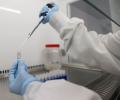
There are 12 sites across India, including private and public hospitals, conducting Phase 1 and 2 human clinical trials for Bharat Biotech's Covaxin. Based on an earlier letter by the Indian Council of Medical Research (ICMR) to the 12 sites, volunteer recruitments for the clinical trials were to begin by July 7. At least three sites are yet to kick-start the process.

India lost its competitive advantage as China gave fiscal benefits to its local manufacturers. Besides, recent policy flip-flops have, however, dented India's image as the 'pharmacy of the world'.
Apart from them, consignments of 11 top importers, including LG, Samsung, Toyota, Honda, and Siemens, will also be allowed entry, relieving them of the 100 per cent inspection rule.

Hetero has priced the injectable drug at Rs 5,400 per 100 mg vial. With More drugmakers in line to launch the drug soon, the prices may see a further erosion.
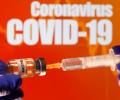
The Hyderabad-based firm will first make the drug available in high case load areas of Maharashtra and Delhi under the brand Covifor. A single dose vial is likely to cost Rs 5,000-6000.
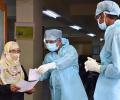
The committee has recommended Rs 8,000-10,000, Rs 13,000-15,000, and Rs 15,000-18,000 including PPE costs for isolation beds, and ICUs with or without ventilator, respectively, to all hospitals. Currently, hospitals are charging Rs 24,000-25,000, Rs 34,000-43,000 & Rs 44,000-54,000 (excluding PPE cost).

The antiviral drug may cost around Rs 55,000 for an 11-dose course, or Rs 5,000 per injection -- much less than the price of imports from Bangladesh, reports Sohini Das.
 © 2026 Rediff.com - Investor Information - Advertise with us - Disclaimer - Privacy Policy - Sitemap - Feedback - About us - Terms of use - Grievances